The best things to do in Rome start with the Colosseum, Roman Forum, Palatine Hill, Vatican Museums and Pantheon, but there’s much more to see and do in Italy’s magnificent capital than its headline sights. I first traveled to Rome in 2015 and have returned almost every year since, even for quick weekends, so this is my all-time list of 33 genuinely different ways to experience Rome, from must-see places to visit to lesser-known sites and fun activities.
Affiliate disclosure: As a vetted GetYourGuide partner, I may earn from qualifying purchases. It won’t cost you extra and helps support this travel blog.
1. Explore the Colosseum, Roman Forum and Palatine Hill
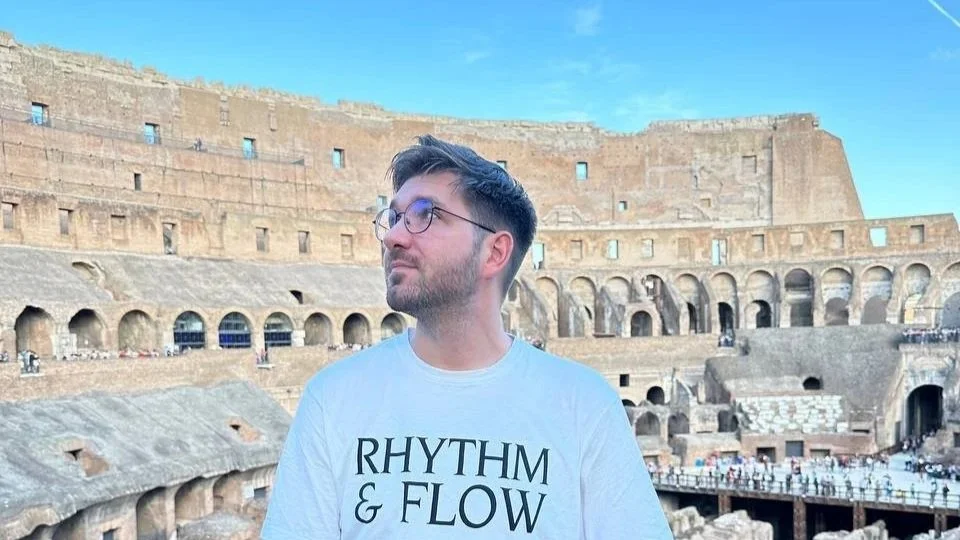
This is the essential Ancient Rome experience and still where I’d start on a first visit. Give all three one proper half-day instead of treating them as separate appointments. The Colosseum becomes even more impressive once you understand what happened below the arena: dozens of lifts brought animals and performers up through the floor. The Forum and Palatine then put that spectacle back into the context of an actual city. If you’re deciding where to stay in Rome, Monti is a great neighborhood to have the key attractions within easy reach.
2. Discover the Vatican Museums, Sistine Chapel and St. Peter’s Basilica
The Vatican is the other must-see I’d build a first Rome trip around, whether the draw is Catholic history, Michelangelo, Raphael or simply the scale of the place. The museums run for roughly seven kilometers, with only a fraction of the Vatican collections on display. Pick your highlights, give the Sistine Chapel time, then continue to St. Peter’s. Free-entry Sundays are worth checking against the current museum calendar. I’ve toured the Vatican more than once, and on my latest Rome trip I stayed in nearby Prati, where calmer streets and local osterias still left the historic center within a 30–40 minute walk.
3. Step Inside the Pantheon
The Pantheon delivers one of Rome’s biggest wow moments for surprisingly little effort. Walk inside, look straight up and the proportions barely make sense for something almost 2,000 years old. Its concrete dome spans around 43 meters, with daylight (and sometimes rain) coming through the open oculus. I’d include it even on a one-day Rome itinerary, then continue toward Piazza Navona or Trevi.
4. Toss a Coin Into the Trevi Fountain
Trevi is famous, touristy and still absolutely worth seeing. I prefer it very early in the morning or late at night, when you can appreciate the whole fountain instead of only the crowd in front of it. Toss the coin, take the photo and keep walking through the historic center. It’s one of the easiest free things to do in Rome after dark and takes very little time to add.
5. Admire the Borghese Gallery and Stroll Villa Borghese
This is my favorite museum-and-park combination in Rome. Bernini is the star inside, especially Apollo and Daphne, where hard marble somehow becomes skin, hair, bark and leaves. Then step outside into Villa Borghese for gardens, bikes, boats, swans, viewpoints and a slower afternoon. It works beautifully for art lovers, couples and hot days when you want to balance an indoor attraction with time outside.
6. Cycle the Appian Way, See the Aqueducts or Train Like a Gladiator
The Appian Way is my favorite active day in Rome. Personally, I enjoyed exploring it even more than the Colosseum. There’s far more space and fewer crowds. You can ride an e-bike over ancient paving stones, continue to Parco degli Acquedotti, go horseback riding or even train at Gladiator School when traveling with kids. It’s adventurous, outdoorsy and one of the best ways to break up several days of churches, ruins and museums.
7. Wander Piazza Navona and Rome’s Historic Centre
Some of my favorite hours in Rome have involved doing very little: walking, stopping for coffee, crossing another piazza and continuing. Piazza Navona is an ideal starting point, with its elongated shape still following the ancient stadium beneath it. From here, the Pantheon, Campo de’ Fiori, Sant’Ignazio and Trevi all fit naturally into the same walk. Late afternoon works especially well as sightseeing turns into dinner.
8. Climb the Spanish Steps and Browse Piazza di Spagna
The Spanish Steps work best as part of a larger walk rather than a destination that needs hours. Start around Piazza di Spagna, browse Via Condotti, climb toward Trinità dei Monti and continue toward Pincio or Villa Borghese. It’s polished, cinematic Rome with excellent people-watching and some of the city’s most famous shopping streets. Early morning is calm; evening brings much more atmosphere.
9. Cross Castel Sant’Angelo and the Passetto di Borgo
Castel Sant’Angelo gets much better once you stop thinking of it as simply another castle. The Passetto di Borgo was a fortified route connecting the Vatican with the fortress, giving popes a protected escape during danger. That story makes the corridors feel surprisingly cinematic. Pair it with the Vatican area and finish toward late afternoon for the rooftop views across the Tiber and back toward St. Peter’s.
10. Spend an Evening in Trastevere and Piazza Trilussa
Cross Ponte Sisto, wander Trastevere, stop at one of the trattorias I’ve pinned on my Rome map (Tonnarello was a good one!), then eventually drift toward Piazza Trilussa. On busy evenings the steps fill with people and street musicians add to the atmosphere. It’s especially easy for solo travelers and younger visitors because you don’t need an organized night out to feel part of it. Just turn up and wander.
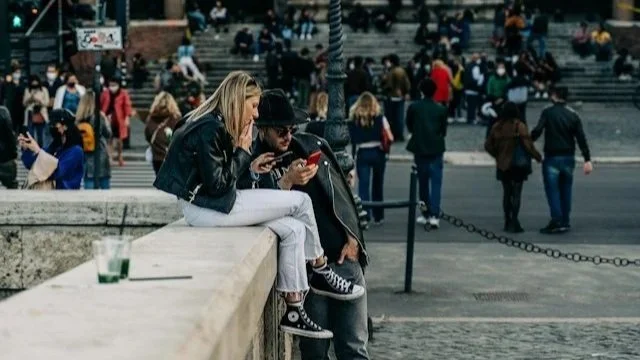
Photo by Gabriella Clare Marino on Unsplash
11. Tour the Capitoline Museums and Tabularium
The Capitoline Museums deserve more attention than they get from visitors rushing toward the Forum. Come for the Capitoline Wolf with Romulus and Remus, then find Marforio—the giant reclining river god seen on the iconic imagery for The Great Beauty. The Tabularium also gives you a fantastic elevated view over the Forum. Afterwards, walk to the Vittoriano and take the panoramic lift for another easy viewpoint over central Rome.
12. Descend Beneath Basilica di San Clemente
San Clemente is one of the hidden gems I recommend most because Rome’s layers become literal. You enter the present basilica, descend into an earlier Christian church and continue farther down into Roman structures and a Mithraic sanctuary. The temperature drops as you go, making it especially good when Rome is hot. It’s compact, atmospheric and far more memorable than simply adding another church to the day.
13. Taste Your Way Through the Jewish Ghetto
Come to the Jewish Ghetto hungry. Walk around the Portico d’Ottavia and surrounding streets, then stop for carciofi alla giudia, the crisp Roman-Jewish artichoke I come here for. I enjoyed mine at Piperno, and it was a great food experience.
This is one of my favorite places to experience Roman history through food rather than another museum. From here, Tiber Island and the river make easy additions before continuing toward Trastevere or the historic center.
14. Venture Underground at the Domus Aurea
Domus Aurea feels more like slipping into an excavation than visiting a museum. Small groups, dim rooms and the scale of Nero’s buried palace make this one of Rome’s most unusual experiences, especially on a second visit. I’d book ahead and choose it over another conventional gallery. Renaissance artists including Raphael explored these buried rooms, and their fascination with the decorations helped popularize the artistic style known as “grotesque.”
15. Catch Sunset From the Orange Garden and Aventine
This is one of my favorite free and romantic things to do in Rome. Walk up the Aventine, find a spot along the Orange Garden terrace and stay as the city softens toward sunset. Before continuing to the Knights of Malta keyhole, detour two minutes to the Garden of St. Alessio, a quieter viewpoint I prefer when the Orange Garden feels busy. Then head to the keyhole, where a tiny opening frames St. Peter’s dome down a tunnel of greenery. Walking around the Aventine is simple, low-key and perfect for couples, a honeymoon or a relaxing evening when another ticketed attraction feels unnecessary.
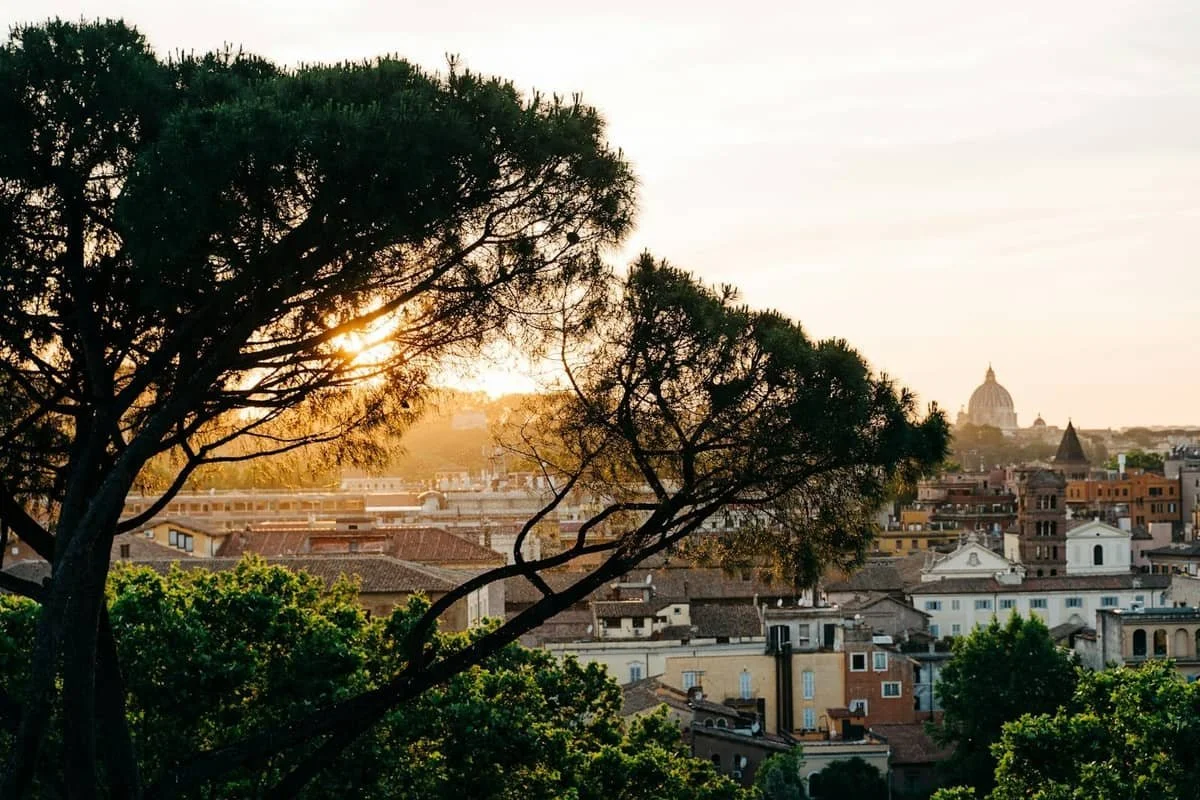
Photo credit: nomadotravel.app
16. Ride Through Rome on a Vespa
Few things feel more Roman than a Vespa ride combined with a photoshoot at some of the city’s best viewpoints. It’s fun, romantic and one of my favorite special things to do for couples, birthdays or a honeymoon. Roman Holiday helped turn the Vespa into part of Rome’s cinematic identity, and the photos make a much better souvenir than another posed monument shot. For an even bigger splurge, Ferrari driving experiences take the Italian fantasy up another level.
17. Eat Your Way Around Rome on a Food Tour
A food tour makes most sense near the start of a Rome trip because everything you eat afterwards becomes easier to understand. I joined one in Trastevere, and my only regret was not arriving hungrier: pasta, pizza, curated cheeses, gelato, wine and Roman specialties kept coming. For me, it was much better value than eating beside the major landmarks, with a wider introduction to actual Roman food.
Testaccio food market is another great option for discovering Rome’s street food such as supplì (deep-fried rice balls filled with tomato sauce and mozzarella) or trapizzino (pizza-sandwich).
For a sit-down dinner, my favorite restaurant in Rome so far is DOC Enobistrot – Cucina & Vineria. I celebrated my birthday there and loved the tartare, seafood, local wine and relaxed atmosphere.
I’ve pinned all my restaurant and bakery picks on my Rome map if you want more places to try.
18. Roam the Baths of Caracalla
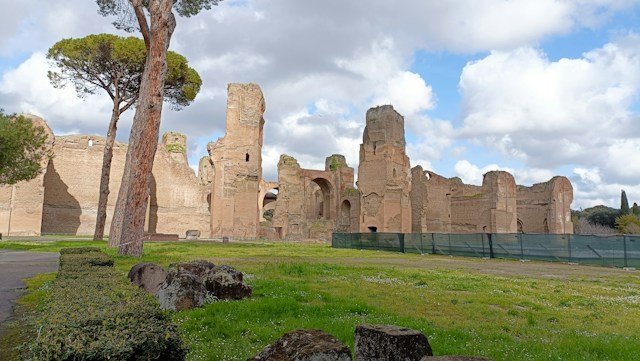
The Baths of Caracalla feel far bigger in person than they do in photographs. Huge brick walls rise around broad open spaces, but there’s still room to wander and imagine the original complex. This is one of my favorite underrated ancient sites: monumental without feeling like another version of the Forum. Roman baths worked more like huge leisure and social centers than somewhere people simply washed, which makes the scale much easier to understand.
19. Go Below St. Peter’s on the Scavi Tour
The Scavi tour is one of the most special experiences around the Vatican. Small groups descend into the ancient necropolis beneath St. Peter’s, around the area traditionally associated with the apostle’s tomb. Constantine deliberately built the first basilica over this site, which makes the relationship between the archaeology and the church above feel very real. Book well ahead; this deserves priority for Catholic travelers and anyone fascinated by early Christianity.
20. Slip Into the Doria Pamphilj Gallery
Doria Pamphilj feels wonderfully removed from Rome’s blockbuster museums. The rooms are lavish, the art is serious and Velázquez’s portrait of Pope Innocent X gives you one instantly recognizable masterpiece. What I enjoy most is how much the gallery still feels like entering an aristocratic palace rather than processing through another enormous museum. It’s elegant, relatively quiet and an excellent indoor choice on a rainy afternoon.
21. Hear Opera or Classical Music in a Roman Palace or Church
Rome gets better after dark when the setting does some of the work. An opera recital near Trevi, chamber music inside a church or a candlelit classical concert gives you a completely different evening from another restaurant-and-bar routine. This stands out for couples, birthdays and special occasions because the venue itself becomes part of the experience. Programs change throughout the year, so it’s worth checking what’s on during your exact dates.
22. Explore Rome’s Catacombs
The catacombs are among Rome’s darker, more secret-feeling experiences. Once underground, the traffic and summer heat disappear and you’re left with narrow corridors, early Christian burial spaces and that slightly eerie feeling of entering a hidden city. This is one of my favorite offbeat choices once churches and above-ground ruins start blending together. Take a guided visit—the stories and symbols are what turn the passages into something memorable.
23. Make Pasta or Pizza in a Roman Cooking Class
A cooking class is an easy win for families, couples and rainy afternoons. You get flour everywhere, learn how the dough should actually feel, make something recognizably Italian and then eat it. I prefer focused classes built around fresh pasta, pizza or tiramisù rather than enormous menus. It’s interactive enough for kids and teens without feeling designed only for children, and you leave with a recipe you can actually recreate at home.
24. Discover Ancient Rome Inside Centrale Montemartini
Centrale Montemartini is one of my favorite non-touristy museums in Rome. Ancient marble gods stand between enormous engines, turbines and industrial machinery inside a former power station—the contrast is brilliant. It’s usually far calmer than the headline museums and works especially well for rainy days, solo visits and repeat trips.
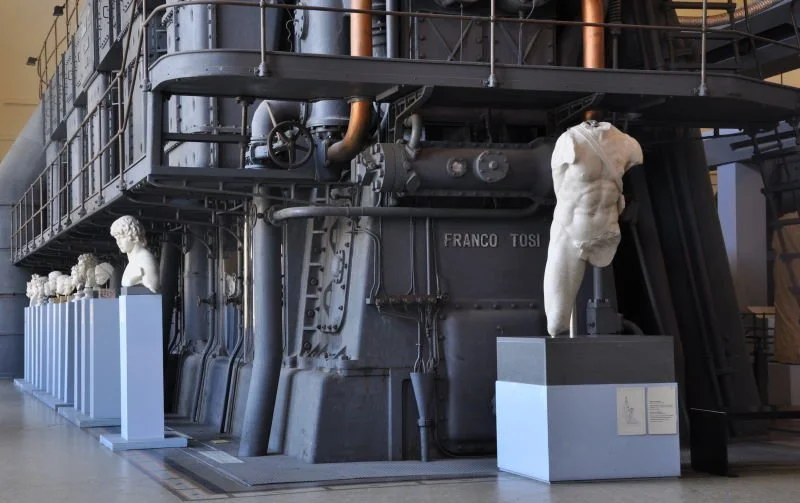
Photo credit: centralemontemartini.org
25. Enter the Capuchin Crypt
The Capuchin Crypt is easily one of the weirdest things to do in Rome. Small chapels decorated with skulls, vertebrae and long bones turn something macabre into elaborate patterns and architectural forms. I’ve been inside, and what stayed with me wasn’t simply the number of bones but how deliberately they’ve been arranged into decorative patterns. It doesn’t take long, but it’s the sort of place you keep thinking about afterwards. This is the obvious pick for spooky, gothic or offbeat Rome and earns extra points on an October trip or anywhere around Halloween.
26. See Ancient Rome Up Close at Palazzo Massimo
Palazzo Massimo shows Ancient Rome in a completely different way from the Forum. Instead of broken temples, you get the color and decoration Romans actually lived with: mosaics, sculpture and reconstructed rooms covered with original frescoes. Livia’s painted garden is the standout for me because the walls create the illusion of opening onto lush greenery. It’s quiet, easy to explore and one of the best indoor options near Termini — an area I use for transport, but no longer choose as a base (check my travel guide for more safety tips).
27. Take In the Art at Palazzo Barberini
Palazzo Barberini is where I’d go once the Vatican and Borghese have covered the obvious art blockbusters. You still get major names like Raphael and Caravaggio, plus a palace shaped by Bernini and Borromini, but the whole experience feels calmer and more under-the-radar. The temporary exhibitions are worth checking too: recent shows have focused on Caravaggio, Artemisia Gentileschi, Titian, Bellini, Bronzino, Giorgione and Bernini, so there’s often an extra reason to visit beyond the permanent collection.
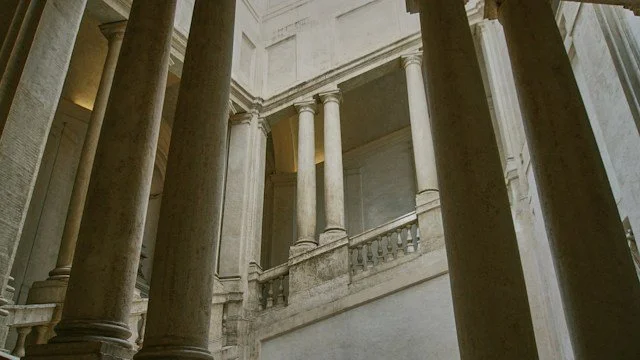
Photo by T. Selin Erkan on Unsplash
28. Create Your Own Roman Mosaic
Making a mosaic changes the way you see them afterwards. Ancient floors stop becoming background decoration once you’ve spent an hour arranging tiny pieces, or tesserae, one by one. This is a quirky, creative break from sightseeing, especially with kids or teens. It’s hands-on, indoors and works brilliantly on a rainy day. Best of all, you take home something you actually made rather than another generic souvenir.
29. Reflect at Fosse Ardeatine and the Museum of the Liberation
Fosse Ardeatine gives you a serious modern side of Rome that can disappear beneath all the emperors and Renaissance art. The memorial marks the 335 people murdered there by German occupation forces in March 1944. Pair it with the Museum of the Liberation for a wider understanding of occupied Rome. This belongs on a second visit or any itinerary where 20th-century history matters. It’s quiet, meaningful and unlike anything else on this list.
30. Walk the Ancient Streets of Ostia Antica
Ostia Antica is my favorite easy day trip for anyone who still wants more Ancient Rome. Instead of seeing one monument at a time, you wander through an entire former port city: streets, baths, apartments, temples, shops, warehouses and a theater. That freedom makes the place feel exploratory rather than formal. Give it at least half a day and wear comfortable shoes. On a four- or five-day Rome trip, it’s one of the easiest excursions to justify.
31. Escape to Tivoli for Villa d’Este and Hadrian’s Villa
Tivoli gives you two completely different reasons to leave Rome for the day: Hadrian’s sprawling imperial retreat and the fountains and gardens of Villa d’Este. I went to Tivoli in April, and it was so beautiful and refreshing. It’s a perfect escape when you want to slow down and have a break from Rome’s crowds.
32. Combine Pompeii and the Amalfi Coast in a Full-Day Trip
Pompeii and the Amalfi Coast make one of the most memorable full-day trips from Rome when your itinerary has room for a proper splurge. Start among Pompeii’s streets and villas, then switch completely to cliffside villages, sea views, lemon groves and that unmistakable southern Italian dolce vita. The combination stands out for a honeymoon, birthday, anniversary or once-in-a-lifetime trip because it feels like two completely different worlds packed into one day.
33. Go Behind the Scenes at Cinecittà Studios
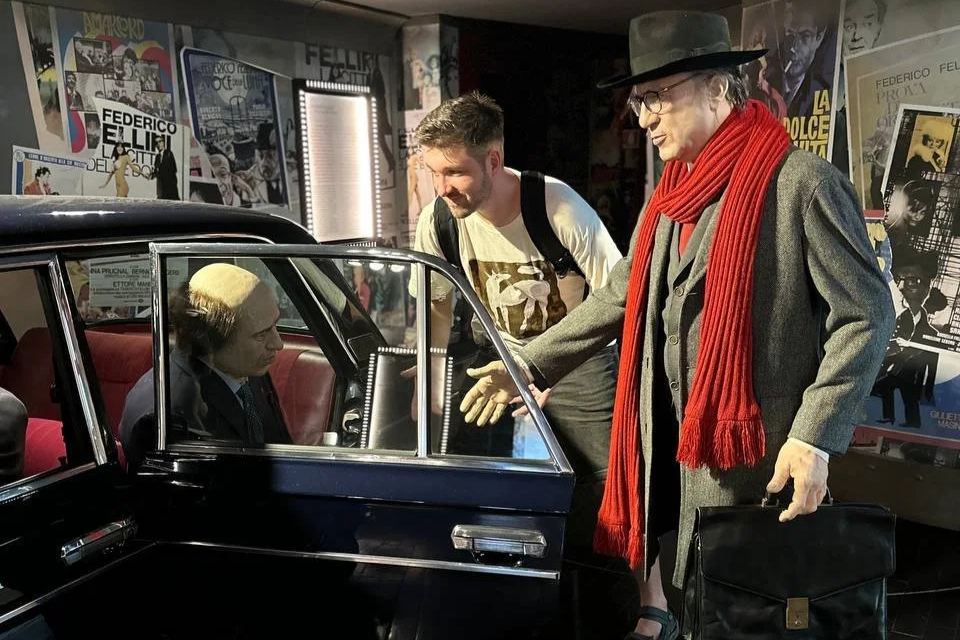
Cinecittà is one of my all-time favorite things to do in Rome, especially as an Italian-film lover. It goes far beyond sets and costumes: I’ve played with the green screen, tried interactive exhibits and dubbed famous scenes, including the Trevi Fountain moment from La Dolce Vita. It’s fun with kids, easy solo, often surprisingly quiet and genuinely non-touristy. Ending here feels fitting: Rome has spent centuries creating spectacle, and Cinecittà shows how it still does.

Author
Anton Levytsky is a photographer and traveler with a deep love for the Mediterranean. He studied Italian film history in Venice, speaks Italian fluently and has explored over forty towns across Italy, including multiple stays in Rome.
Check my other travel guides: Things to Do in Budapest · Things to Do in Lisbon